The Bean Dip News
Contact Information
Email:
ggandb@onecommail.com
Ph:
920-682-8828
Fax:
920-682-8828
Join Newsletter
Copyright © 2010 Grape Grain and Bean. All Rights Reserved.
Extracting Flavor

Also, investigate the use of pectinase or other types of enzymes. Many fresh fruits will have such high levels of pectins that the home winemaker can’t get all the flavor from the fruit or has a hard time clarifying the wine.

Properly employed, this treatment will break down the pectins, the long-chain sugars that make jams and jellies “gel,” and help extract the juice and flavor from your fruit.

This should get you started using fresh fruit for your wines. By varying any of the harvest criteria, you will vary the wine. You now have endless potential to subtly change your style, focus on the flavors you want, and knock the socks off your friends and coworkers. 

A Few Tips for Making Wine

So now that you’ve harvested your fruit, you’re ready to turn it into wine. Grapes need to be crushed, and if you are making white wine, they need to be pressed. Apples need to be ground and pressed. Peaches, cherries, plums, and other stone fruits need to be pitted and at least chopped up if they are large. Berries need to be a bit mashed or otherwise broken up.

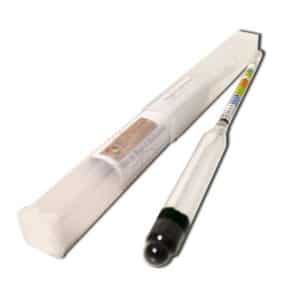
Analyze the must (crushed fruit). If you don’t do this now, you need to learn. Familiarize yourself with a hydrometer for sugar readings, litmus strips or a pH meter for pH levels, and a titration with sodium hydroxide or other base to determine total acidity, known as AC.

The difference between winemakers who take sugar, acid, and pH readings to base their adjustments and those who follow a pat recipe is that those who analyze will generally have more consistent wines.

 
The way we cool wort is consistent with our efforts to recycle everything. Most breweries, ours included, transfer a good percentage of the heat in the kettle to the water in the hot liquor tank. This is accomplished with a one- or two-stage plate heat exchanger, cooling the wort while heating supply water.

Energy recovery is not as much of an issue for the homebrewer, but the other concerns related to cooling — aerating and transferring the wort to the fermenter — are shared by all brewers.


Cooling Wort

A typical commercial wort-cooling operation and a homebrewing setup have similarities as well as differences. A commercial brewer pumps wort through a two-stage heat exchanger. The cool wort is then aerated as it passes to the fermenter. The wort temperature is controlled by adjusting the flow of the wort. Opening the wort valve increases the wort flow rate, decreasing its time through the heat exchanger. In turn this lowers the ability for the exchanger to cool the wort. That control can be manual or automatic.

Homebrewers typically cool wort with a submerged coil in an ice or water batch. Small wort chiller are available but are very similar to the more basic setup. Just like a commercial operation the temperature is controlled by monitoring the wort flow rate. In my opinion the simplest way is to let the wort flow down the inside wall of the fermenter.

Whatever method you use, quality always plays a role. That includes temperature consistency, a short strikeout, limiting trub to the kettle, and proper sanitation.

Striking out at consistent wort temperature is important for two reasons. 1) Yeast only metabolize dissolved oxygen, and the solubility of oxygen is a function of the atmospheric pressure and wort temperature. 2) Trying to reduce strikeout time and bringing the wort a few degrees above fermentation temperature while cooling it in the fermenter can cause yeast to lag in the propagation stage. Therefore you need to keep cooling off the jacket when the yeast is first starting. Transfer it at fermentation temperature or a degree below to see positive results.

What this means for the homebrewer is if you are not measuring your wort temperature as it enters the fermenter, start. Then control the temperature by controlling the wort flow. You can control your wort flow by pinching and restricting the transfer tube or by adding a valve. If your wort temperatures are running too low even at full flow, then that indicates your wort is spending too much time in the chiller. You have two options. Reduce the number of coils or increase the flow by raising the hot-wort container higher.

Minimizing the strikeout time is crucial to slowing the rate of alpha-acid isomerization. This bittering action does not shut off when you stop the boil; it only slows down. Keep the strikeout short by keeping your heat exchanger, namely the coils, clean.

Minimize the hot-break carryover by keeping the trub in the kettle. Otherwise it could hinder your transfer to the fermenter by clogging the heat exchanger and stopping the flow. We pump the wort off the side of the kettle. For the homebrewer, keep the suction of the siphon tube above the trub.

Sanitize everything that contacts the wort after it touches the kettle. Nothing will ruin your brew more than an infection. We sterilize the wort transfer lines and heat exchanger by circulating 160° F water for 30 to 40 minutes. Homebrewers you can sterilize their metal cooling coil in the oven for 10 minutes at a low heat setting (225° F). You can use hot water to sterilize any plastic tubing by slowly pushing hot water (130° to 140° F) through the tubing for 30 to 40 minutes.


Thanks for reading the Bean Dip News.
 
email me
Sign InView Entries
Family Owned and Operated Since 2004.
A Green Company
Customer Comments:

Hi Marc,
Just wanted to say "Thanks" for helping me the other day and that the clearing agent really works.  Can't believe just how much sediment is in that wine even after sitting and re-racking 3 times over 9 months time.  Amazing!  Can't wait until bottling time.

Lyle


You folks have a great store, thanks for all the help.  My first time brewing was easy, I could call you during the brew when I had questions and they were answered.  I will pass your name to my friends that would like to brew.

Thanks again
Devion